Which Digital Marketing Strategy Is Best? A Practical Guide
If you’ve ever typed “best digital marketing strategy” into Google, you already know the problem: everyone has an opinion, and most of them contradict each other. SEO experts swear by organic search. Social media managers insist paid ads on Instagram or TikTok are the future. Email marketers quietly point out that their channel still has the highest ROI of them all.
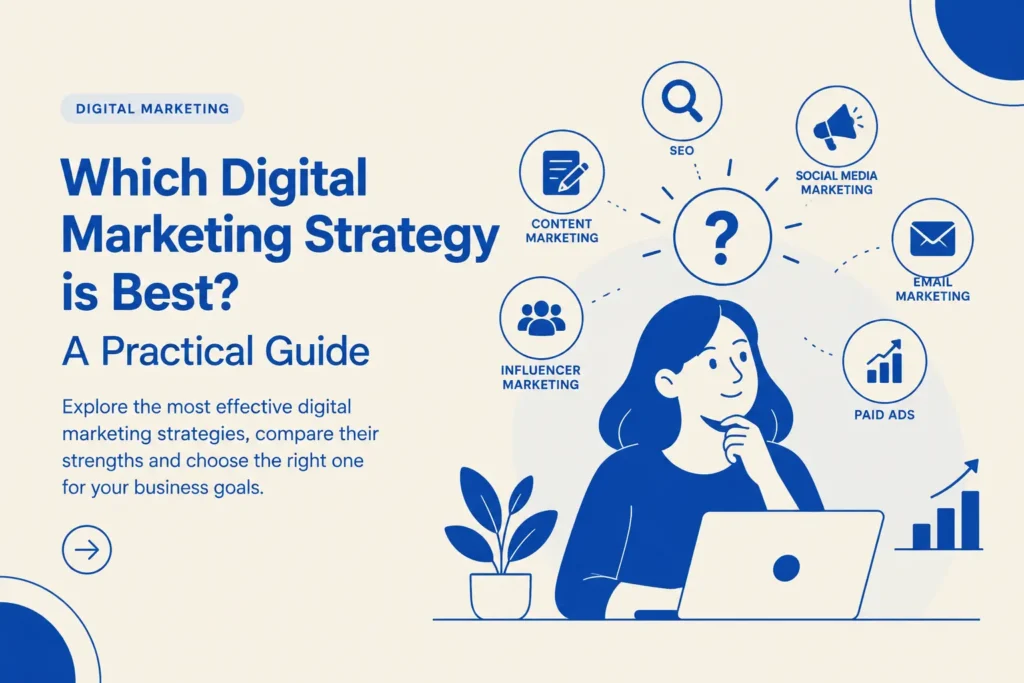
The truth is less exciting than any single answer: there is no universally “best” digital marketing channel. The right strategy depends on your budget, your audience, your product, and how fast you need results. What follows is a breakdown of the major channels, when each one shines, and how to think about combining them.
1. Search Engine Optimization (SEO)
SEO is the practice of improving your website so it ranks higher in search results for terms your potential customers are already typing in. It’s a long game often taking three to six months before you see meaningful traffic but the payoff is durable. Once a page ranks well, it can keep bringing in visitors for years without ongoing ad spend.
Best for: Businesses that can afford to play the long game service businesses, B2B companies, blogs, and e-commerce stores with evergreen products.
Downside: Slow to show results, and Google’s algorithm updates can shift rankings overnight.
2. Pay Per Click (PPC) Advertising
PPC, whether through Google Ads or Bing, puts your business at the top of search results immediately, but you pay every time someone clicks. It’s the fastest way to test whether an offer converts, because you can be live within a day and see real data within a week.
Best for: Businesses that need quick visibility, are launching a new product, or want to test messaging before investing in organic content.
Downside: Costs stop the moment your budget runs out there’s no lasting asset the way there is with SEO content.
3. Social Media Marketing
Social platforms let you build a relationship with your audience over time through organic posts, and reach new audiences quickly through paid ads. Instagram and TikTok tend to favor visually driven, younger skewing brands; LinkedIn works well for B2B and professional services; Facebook still has strong reach for local and community based businesses.
Best for: Brands with a visual product, a strong personality, or a niche community they want to nurture.
Downside: Organic reach has been declining for years across most platforms, which increasingly pushes brands toward paid promotion to stay visible.
4. Content Marketing
This is the strategy of creating valuable content blog posts, videos, guides, podcasts that answers your audience’s questions and builds trust before they ever consider buying. Content marketing overlaps heavily with SEO, but it can also be distributed through email, social, and partnerships.
Best for: Businesses selling something that requires education or trust building before purchase think software, financial services, or health products.
Downside: Requires consistent output over months to build momentum; a handful of posts rarely moves the needle.
5. Email Marketing
Despite being one of the oldest digital channels, email consistently posts some of the highest returns of any marketing method, largely because you’re speaking directly to people who’ve already expressed interest in your brand. A well built list and thoughtful automation (welcome sequences, abandoned cart reminders, reengagement campaigns) can quietly become a business’s most profitable channel.
Best for: Almost every business it works best as a complement to other channels rather than a standalone strategy, since you need another channel to build the list in the first place.
Downside: You need permission (an opt in list) before you can use it, which means it can’t be your very first move.
6. Influencer Marketing
Partnering with creators who already have your target audience’s attention can shortcut the trust building process. This doesn’t require celebrity level influencers “micro influencers” with smaller, highly engaged audiences often deliver better returns per dollar spent.
Best for: Consumer brands, especially in fashion, beauty, fitness, and lifestyle categories.
Downside: Harder to measure precisely, and results depend heavily on choosing the right partner.
So, Which One Is Actually Best?
Rather than picking one channel, most successful businesses combine two or three that complement each other:
A new business with limited budget: Start with organic social media and SEO focused content to build visibility without heavy ad spend, then layer in email marketing as your list grows.
A business ready to scale fast: Use PPC to generate immediate traffic and sales, while building SEO content in parallel so you’re not permanently dependent on ad spend.
A B2B or high consideration product: Lean on content marketing and LinkedIn to build authority, supported by email nurture sequences for leads who aren’t ready to buy yet.
The Real Answer
The best digital marketing strategy is the one that matches your specific goals, budget, and timeline and it almost always involves more than one channel working together. Start by asking where your customers already spend their time and what they need to trust you before buying. Build from there, measure what’s working, and be willing to shift budget toward the channels that actually move the needle for your business.
AI can help marketers identify patterns and deliver communication at more relevant moments.
For example, AI can help determine:
What to send → Who should receive it → When to send it → Which message is most relevant
This can make email and CRM campaigns more useful without making customers feel like they are being constantly monitored.
The Right Balance
The future of personalization isn’t about knowing everything about your customers.
It’s about using customer information responsibly to create genuinely helpful experiences.
When AI, CRM data, consent, and privacy work together, personalization can become a powerful way to build stronger customer relationships.
Final Thought
Personalization gets attention. Privacy builds trust.
The brands that succeed with AI hyper-personalization will be the ones that understand both sides—and use technology to make customer experiences better, not intrusive.